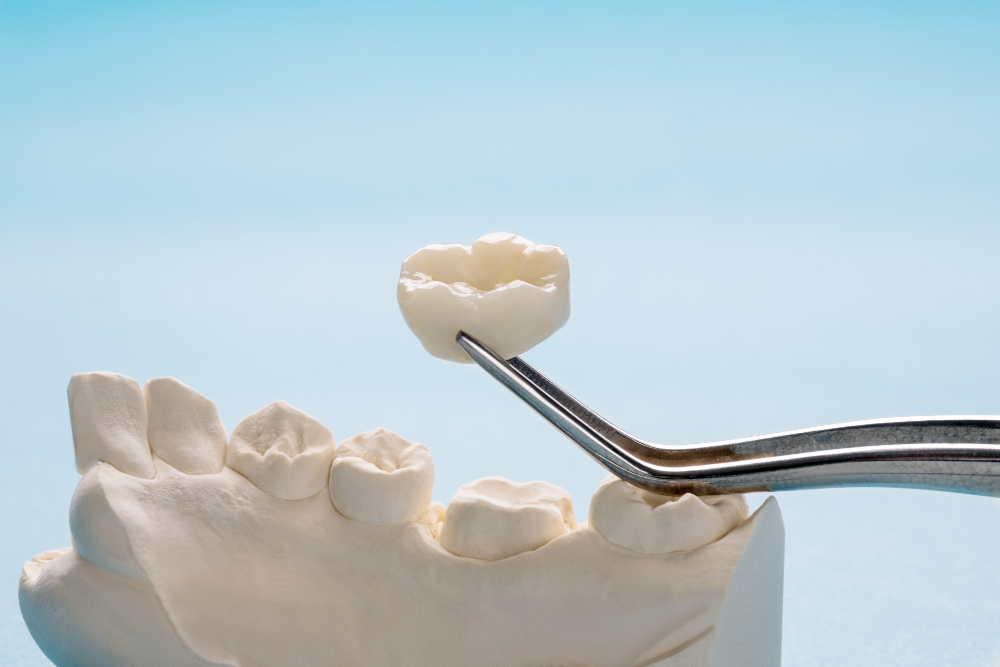
Dental crowns and bridges are common ways to fix damaged or missing teeth. These dental treatments help restore your smile and improve how your teeth work. Many people choose dental crowns and bridges for a smile makeover or better dental care. In this blog, you will learn what dental crowns and bridges are, why you might need them, and how they can help you.
What Are Dental Crowns and Bridges?
First, let’s look at what these terms mean. A dental crown is a cap that covers a weak or broken tooth. It makes the tooth stronger and looks like a real tooth. On the other hand, a dental bridge fills the gap left by one or more missing teeth. The bridge uses nearby teeth for support. Both crowns and bridges are made from strong materials like porcelain, ceramic, or metal. Because they match your natural teeth, they blend in well with your smile.
Common Reasons for Needing Crowns and Bridges
There are several reasons why your dentist may suggest crowns or bridges. For example, you might need them if you have:
In many cases, dental crowns and bridges help restore your ability to chew and speak clearly. They also prevent other teeth from shifting out of place.
The Procedure: How Crowns and Bridges Are Placed
Getting a dental crown or bridge usually takes two visits. During the first visit, your dentist will examine your teeth and take X-rays. Next, they will shape the tooth or teeth to fit the crown or bridge. Then, they take an impression to make a custom fit. While you wait for the final crown or bridge, you may get a temporary one. At the second visit, your dentist will place the permanent crown or bridge and check the fit. After that, you can use your teeth as normal.
Benefits of Dental Crowns and Bridges
There are many benefits to choosing dental crowns and bridges. For instance, they:
Because they look natural, most people will not notice you have a crown or bridge.
Risks and Considerations
Although dental crowns and bridges are safe, there are some risks. For example, you may feel some tooth sensitivity after the procedure. Sometimes, the crown or bridge may become loose or fall off. In rare cases, you could develop an infection or have an allergic reaction to the materials. However, most problems can be fixed by your dentist. It is important to follow your dentist’s advice and report any issues right away.
Aftercare and Maintenance Tips
Proper care helps your dental crowns and bridges last longer. Here are some tips:
With good dental care, your crowns and bridges can last many years.
Prevention: How to Protect Your Dental Work
To keep your dental crowns and bridges in top shape, you should protect your teeth from damage. For example, avoid biting on hard objects like pens or ice. If you play sports, wear a mouthguard to prevent injury. In addition, eat a balanced diet and limit sugary snacks. Because healthy habits protect your dental work, you can enjoy your smile for years to come.
For more information, you can visit trusted sources like the American Dental Association or speak with your local dentist.
Consult your dentist Dr. Ravi Ahuja to find out if dental crowns or bridges are right for you.